
If your diesel particulate filter keeps blocking, cleaning the filter may only solve part of the problem. A DPF collects soot and periodically burns much of it away during regeneration. When the warning returns soon after a regeneration or clean, a driving-pattern, sensor, engine or maintenance issue may be preventing the system from working correctly.
The best first step is a proper DPF diagnosis. DPF-PRO assesses the cause before recommending work, so treatment is based on evidence rather than the warning light alone.
Soot and ash are different
Soot is produced during combustion and is what the DPF is designed to trap. Under the right operating conditions, regeneration raises exhaust temperature and burns much of that soot away.
Ash is the non-combustible residue left by engine-oil additives and normal long-term use. Regeneration cannot burn ash away. As mileage increases, ash can reduce the filter’s usable capacity. Diagnostic readings and the vehicle’s history help determine whether the restriction is mainly soot, ash or another problem.
Why a DPF can keep blocking
Short journeys and interrupted regeneration
Frequent short journeys, prolonged idling and stop-start use can make it difficult for some vehicles to complete regeneration. Turning the engine off during an active regeneration can interrupt the process. The correct conditions vary by manufacturer and model, so follow the vehicle handbook rather than relying on a universal speed, temperature or journey time.
Temperature and pressure sensor faults
The engine control unit uses exhaust-temperature and differential-pressure information to decide when regeneration is needed and whether it is working. A faulty sensor, damaged wiring or a blocked pressure pipe can provide misleading readings. This can prevent regeneration, trigger it at the wrong time or make a healthy filter appear restricted.
EGR, air-intake and boost problems
Problems with exhaust gas recirculation, air metering, intake leaks or boost control can affect combustion and increase soot production. Cleaning the DPF without identifying one of these faults may lead to another blockage.
Injector, turbo or engine faults
Poor injector performance, turbocharger faults and other engine problems can create excess particulate matter or contamination. Warning lights, unusual smoke, oil use, coolant loss or poor running should be investigated before regeneration or cleaning is attempted.
The engine is not reaching normal temperature
A cooling-system or thermostat problem may stop the engine and exhaust system reaching the conditions required for regeneration. Live diagnostic data can show whether the vehicle is warming up and operating as expected.
Incorrect engine oil or contamination
Many DPF-equipped engines require a manufacturer-approved low-ash oil, often described as low-SAPS oil. Using the wrong specification can increase non-combustible residue. Oil or coolant entering the exhaust can damage or contaminate the filter, so the source must be repaired before the DPF is treated.
High ash loading or physical damage
A high-mileage filter may have accumulated significant ash even when regeneration has worked normally. Filters can also be cracked, melted or contaminated beyond a suitable cleaning process. Inspection and test results are needed before deciding whether cleaning is appropriate.
Can a normal drive clear the warning?
Sometimes a vehicle with an early soot-loading warning can complete regeneration during a suitable uninterrupted drive. Only try this when the vehicle handbook recommends it and the car is otherwise running normally. Do not continue if there is a red warning, overheating, unusual noise or smoke, significant loss of power, or a message telling you to stop. A warning that persists or quickly returns needs diagnosis.
A forced regeneration is not automatically the right answer. If there is an engine fault, unsuitable oil level, excessive loading or a sensor problem, forcing a regeneration may fail or be inappropriate. Diagnostic checks should guide the decision.
What should be checked before cleaning?
- Fault codes and freeze-frame information
- Live differential-pressure readings at relevant engine speeds
- Exhaust-temperature sensor readings
- Calculated soot and ash values, interpreted with care
- Regeneration history and interrupted attempts
- Engine temperature and cooling-system operation
- Airflow, boost, EGR and fuel-system data where relevant
- Oil level, oil specification and signs of contamination
- Pressure pipes, wiring and connectors
These checks help establish whether the vehicle needs a repair, controlled regeneration, professional DPF cleaning, or a different course of action.
When professional DPF cleaning may help
Cleaning may be appropriate when testing shows that the filter is restricted, structurally serviceable and suitable for the selected process. The cause of the blockage should be repaired or managed first; otherwise, the filter may become restricted again.
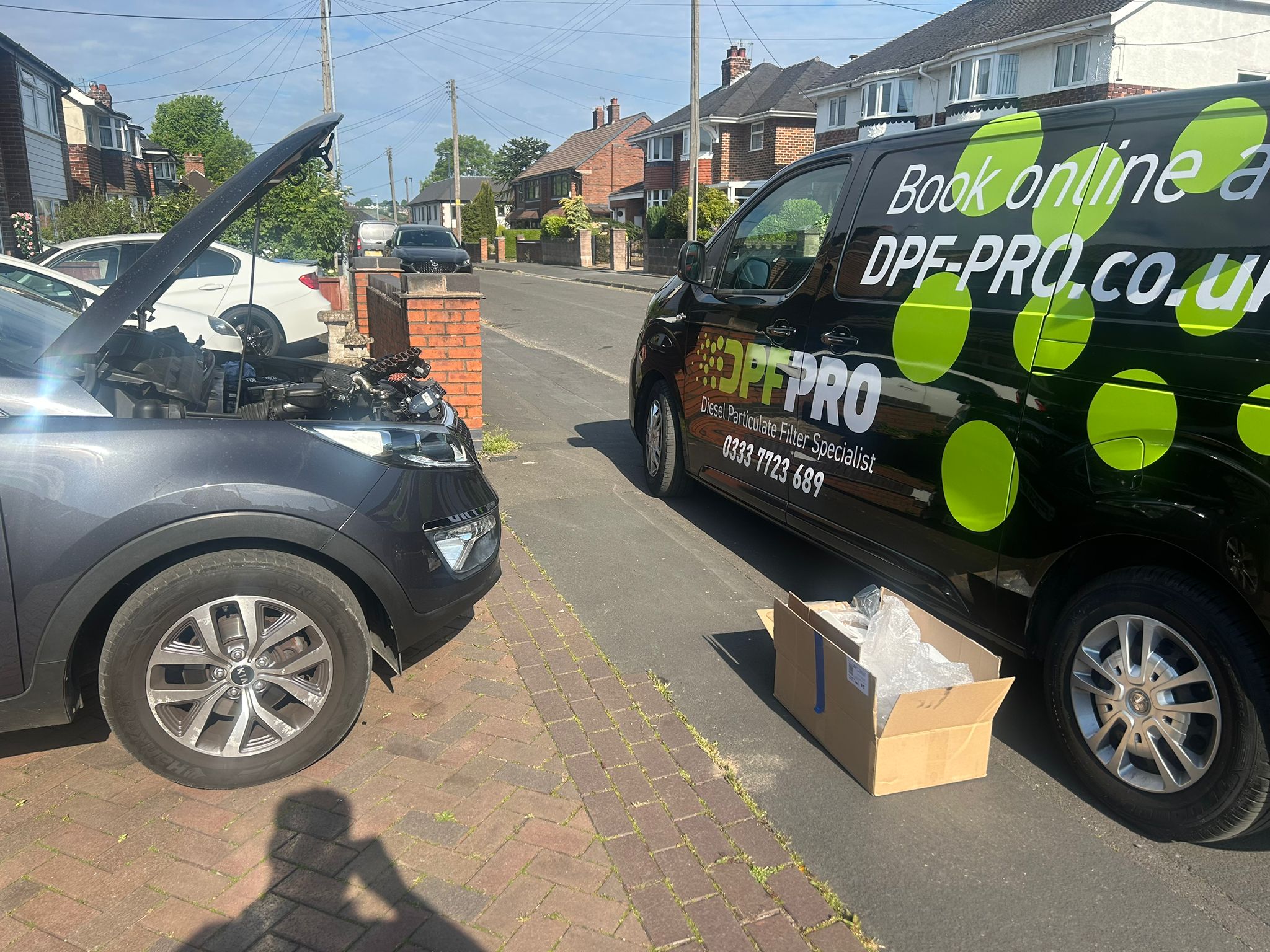
DPF-PRO provides mobile assessment, diagnostics and cleaning at the customer’s home or workplace. We do not promote DPF removal or deletion. Work is assessed individually, and applicable cover is explained in our limited warranty.
How to reduce another blockage
- Use the correct manufacturer-approved engine oil.
- Keep servicing up to date and investigate engine warnings promptly.
- Allow an active regeneration to finish when safe and practical.
- Follow the manufacturer’s regeneration guidance.
- Do not ignore repeated oil-level rises, smoke, coolant loss or poor running.
- Arrange diagnosis when the warning returns soon after previous work.
Mobile DPF diagnosis across our service areas
DPF-PRO covers a wide area across the Midlands, Yorkshire, the North West and Bedfordshire, including Birmingham, Coventry, Wolverhampton, Leicester, Derby, Nottingham, Burton-on-Trent, Swadlincote, Tamworth, Stoke-on-Trent, Cannock, Stafford, Leeds, Sheffield, Rotherham, Doncaster, Mexborough, Manchester, Liverpool, Warrington, Preston, Bedford and Luton, plus surrounding towns.
Check the full areas we cover or call 0333 772 3689 to discuss your vehicle’s symptoms and location.
Repeated blockage needs a cause, not a guess
A recurring DPF warning does not prove that the filter alone is faulty. Driving pattern, failed regeneration, sensor data, engine condition, oil specification and ash loading can all play a part. Starting with diagnosis gives you a clearer decision and reduces the risk of paying repeatedly for work that does not address the underlying problem.

