
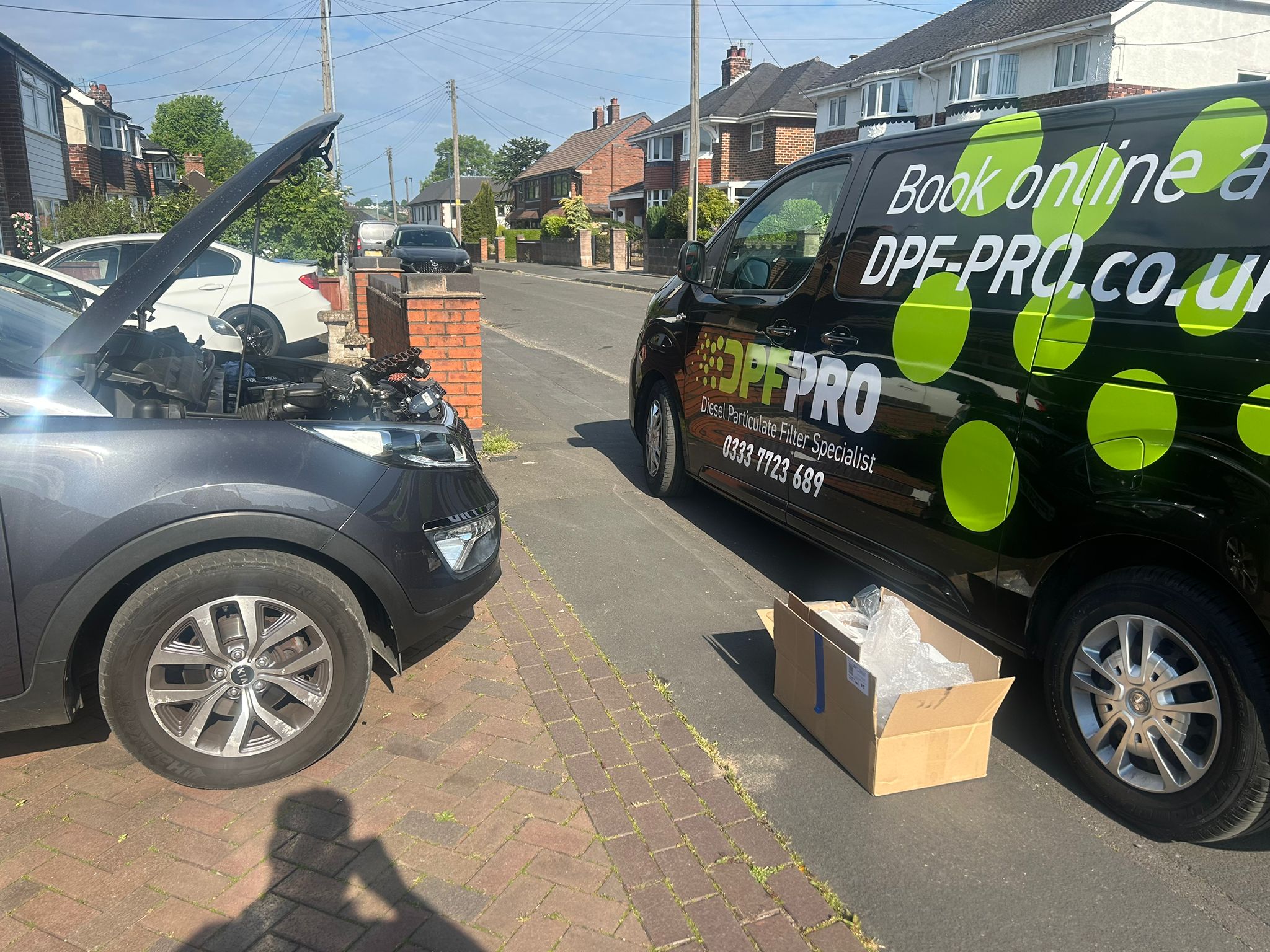
A DPF warning light can mean the vehicle has detected a problem with soot loading or regeneration, but it does not prove that the filter needs cleaning. The safest next step depends on the exact warning, any other lights, how the vehicle is driving and the instructions for that make and model.
For drivers in Doncaster, Rotherham, Mexborough and nearby parts of South Yorkshire, this guide explains when a handbook-approved drive may be appropriate, when to arrange diagnosis and why treating the cause matters as much as treating the filter.
What does a DPF warning light mean?
A diesel particulate filter traps solid particles from the exhaust. During regeneration, accumulated soot is burned at high temperature, leaving a small amount of residue. If regeneration does not complete normally, soot can build up and the vehicle may illuminate a DPF or engine-management warning.
The symbol and required response vary between manufacturers. Check the vehicle handbook before acting. Do not assume that advice written for another make, engine or warning-light combination applies to your vehicle.
Can you keep driving with the DPF light on?
Start with the handbook and the full dashboard picture:
- One amber DPF light and no other obvious problem: some manufacturers specify a particular driving procedure to support regeneration. Follow the handbook exactly, including any stated speed, engine-speed, fuel-level and duration requirements.
- More than one warning light, reduced power or abnormal behaviour: do not rely on a generic motorway drive. Arrange appropriate assistance or professional assessment.
- The light remains on after the correct procedure: continuing to repeat the same drive is unlikely to explain why regeneration is not completing. Diagnosis should come next.
Volkswagen UK, for example, publishes one specific procedure for a single amber DPF light and directs drivers to assistance when multiple lights are showing or the light does not clear. That is an example of manufacturer-specific guidance, not a universal instruction for every diesel.
Why might the warning return?
A DPF problem can return when the condition that interrupted regeneration or increased soot production has not been corrected. Possible areas for investigation depend on the vehicle and may include journey pattern, pressure or temperature sensing, related pipework, electrical faults, exhaust leaks and other engine-management issues.
A stored fault code is evidence, but it does not always identify the failed component or prove that the filter is the root cause. The code needs to be interpreted alongside symptoms, vehicle history, live data and relevant physical checks.
Read our detailed guide to DPF diagnostics before cleaning for the checks that may form part of an assessment.
What can a mobile DPF assessment involve?
The exact procedure depends on the vehicle, but a diagnosis-led visit may consider:
- the warning lights and recent symptoms;
- stored and pending diagnostic trouble codes;
- available live data, including whether readings behave plausibly;
- recent driving pattern and previous regeneration or cleaning attempts;
- relevant sensors, hoses, wiring or exhaust-system checks where indicated;
- whether regeneration, cleaning, another repair or further investigation is the appropriate next step.
Cleaning should follow evidence that it is suitable. A forced regeneration may help in some circumstances, but it cannot remove accumulated ash and should not be treated as the automatic answer to every DPF warning. See when forced DPF regeneration may help.
Mobile DPF help in Doncaster, Rotherham and Mexborough
DPF-PRO has dedicated mobile service information for Doncaster, Rotherham and Mexborough. Availability depends on your location, vehicle and the work required, so contact the team with the registration, warning lights and symptoms before booking.
If you are outside those towns, check the areas DPF-PRO covers or call to confirm whether a mobile visit is available.
What information should you provide?
Useful details include:
- the vehicle registration, make, model and engine;
- which warning lights are illuminated and whether any are flashing;
- whether the vehicle has lost power or entered limp mode;
- when the issue started and whether it is intermittent;
- your typical journey pattern;
- any recent repairs, sensor replacements, regeneration attempts or DPF cleaning.
This information helps the technician prepare for the assessment and reduces guesswork.
DPF removal is not a repair
GOV.UK states that a missing DPF, where one was fitted when the vehicle was built, will result in an MOT failure. It also explains that using a vehicle modified so it no longer meets the emissions standards it was designed for is an offence. DPF-PRO does not promote DPF removal.
Frequently asked questions
Will a motorway drive clear the DPF light?
It may help only when the manufacturer specifies a suitable driving procedure and the vehicle is otherwise in the correct condition. It is not a universal fix. Read when a motorway drive may help and when it will not.
Does a DPF warning mean the filter needs cleaning?
No. The warning needs context. Diagnosis may show that regeneration is appropriate, that cleaning is justified, that another fault needs attention or that further testing is required.
Can I keep driving if the car is in limp mode?
Reduced-power mode can have several causes and may change what is safe or appropriate. Follow the handbook and arrange assessment rather than trying repeated high-speed driving. See our guide to DPF warnings and limp mode.
Can the DPF be removed to stop the problem returning?
No. Removal can make the vehicle illegal for road use and can cause an MOT failure. The correct approach is to diagnose the cause and repair or treat the system appropriately.
Book a mobile DPF assessment in South Yorkshire
For a DPF warning light in Doncaster, Rotherham, Mexborough or another covered area, call DPF-PRO on 0333 772 3689 or review the Doncaster mobile service page. Service availability and the appropriate next step depend on the vehicle, symptoms and assessment findings.
Sources checked 22 October 2026: DVSA/DfT guidance on diesel particulate filters, the current DVSA MOT inspection manual, and Volkswagen UK DPF warning-light guidance. Always follow the handbook for the exact vehicle.


