
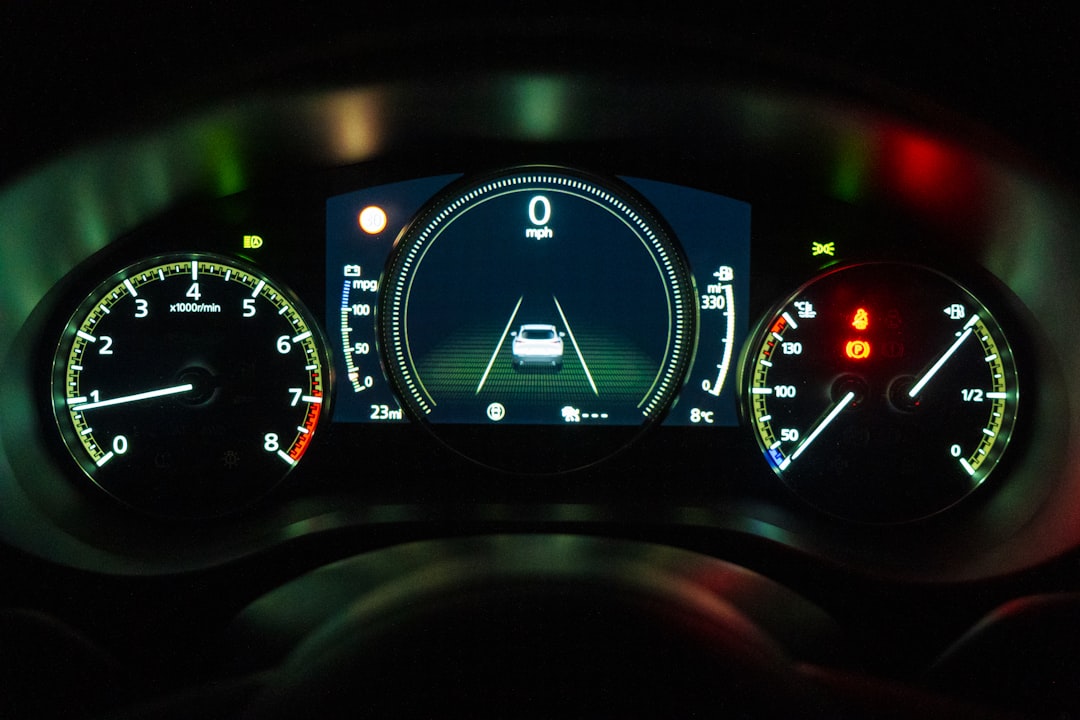
If your DPF warning light has appeared, you may have been told to “take the car for a blast down the motorway.”
Sometimes a longer, uninterrupted drive can help a diesel particulate filter complete a regeneration. However, it isn’t a guaranteed cure—and in some situations, continuing to drive may make the problem worse.
The important question is not simply whether the DPF contains soot. It is why the vehicle has been unable to clear it normally.
What does a DPF do?
A diesel particulate filter captures soot produced by a diesel engine, preventing much of it from being released through the exhaust.
The vehicle periodically removes accumulated soot through a process called regeneration. This raises the temperature inside the exhaust system and burns the soot away.
Regeneration may happen automatically while you drive. Problems can develop when the vehicle repeatedly fails to reach or maintain the conditions needed to complete that process.
Why might a motorway drive help?
Short journeys, prolonged idling and frequent stop-start driving can make successful regeneration more difficult.
A longer, uninterrupted journey allows the engine and exhaust system to reach normal operating temperature. If the vehicle is otherwise working correctly and the DPF soot level is not excessive, this may give it an opportunity to complete regeneration.
However, motorway speed alone is not the solution. The conditions required vary between makes and models, so always follow the instructions in your vehicle handbook.
When is a regeneration drive worth considering?
A drive may be appropriate when:
- Only the amber DPF warning light is showing
- The vehicle is otherwise driving normally
- There are no additional engine or emissions warnings
- The vehicle is not in limp mode
- The engine has sufficient fuel
- The manufacturer’s handbook recommends a regeneration drive
Choose a safe, legal route where you can drive continuously without repeatedly stopping.
Never try to maintain a particular speed or engine speed if road and traffic conditions make doing so unsafe.
When should you not simply keep driving?
A motorway drive should not be treated as a universal fix.
Arrange professional advice or diagnosis if:
- More than one warning light is showing
- The engine management light is illuminated
- A warning light is flashing or red
- The vehicle has entered limp mode
- There is a significant loss of power
- The engine is running badly
- The vehicle is producing unusual smoke or smells
- The oil level has risen or an oil warning is displayed
- The DPF warning returns shortly after disappearing
- A regeneration drive has already failed
If you are uncertain whether the vehicle is safe to drive, consult the handbook and obtain professional advice.
Why might the DPF fail to regenerate?
A DPF warning can be the result of repeated short journeys, but driving pattern is only one possibility.
Regeneration can also be affected by problems such as:
- Faulty pressure or temperature sensors
- EGR system faults
- Glow-plug or control-system faults
- Thermostat or temperature-related problems
- Air intake or boost faults
- Injector or combustion problems
- Incorrect engine oil
- Excessive soot production
- A DPF that is already too heavily loaded
If one of these faults is present, taking the vehicle on repeated motorway journeys may not resolve the underlying problem.
Soot and ash are not the same
Regeneration burns soot, but it does not remove all the ash that accumulates inside a DPF over its working life.
This distinction matters because a filter restricted mainly by ash cannot be restored simply by driving the vehicle harder or attempting repeated regenerations.
Diagnostic information and pressure readings help establish whether the problem involves soot loading, ash accumulation, a sensor fault or something elsewhere in the engine.
What if the warning light goes out?
If the light goes out during the journey, the vehicle may have completed regeneration successfully.
That is encouraging, but continue to monitor it.
If the warning returns soon afterwards, regeneration may only be dealing with the symptom temporarily. A recurring warning deserves proper investigation, particularly if the vehicle regularly completes longer journeys.
Repeatedly clearing the light without identifying the cause can allow the original fault to become more serious.
Is a forced regeneration the answer?
A forced regeneration uses diagnostic equipment to instruct the vehicle to begin regeneration under controlled conditions.
It can be useful in suitable circumstances, but it should not be attempted automatically on every blocked DPF.
Before proceeding, a technician should consider the vehicle’s fault codes, soot loading, temperatures, pressure readings and general condition. If an underlying fault is preventing regeneration, that fault may need attention first.
The aim should be to understand why the DPF became blocked, not simply to switch off the warning light.
Does a blocked DPF always need replacing?
No. A blocked DPF and a physically failed DPF are not necessarily the same thing.
Depending on the condition of the filter and the reason for the restriction, the appropriate solution might involve:
- Correcting the fault preventing regeneration
- Allowing the vehicle to complete regeneration
- A professionally controlled regeneration
- Specialist DPF cleaning
- Repairing or replacing another component
- DPF replacement when the filter is damaged or beyond recovery
Diagnosis helps prevent expensive parts being replaced unnecessarily.
Mobile DPF diagnosis and cleaning from DPF-PRO
If your DPF warning light will not clear, your vehicle has lost power or the warning keeps returning, DPF-PRO can come to your home or workplace.
Our technicians assess the vehicle and investigate the cause of the problem before recommending the appropriate solution.
We provide mobile DPF diagnostics and cleaning across the Midlands, Yorkshire, the North West and other covered areas, including Leeds.
Do not keep guessing or repeatedly attempting motorway journeys. Book a DPF assessment with DPF-PRO and let us identify what is preventing your vehicle from regenerating properly.

